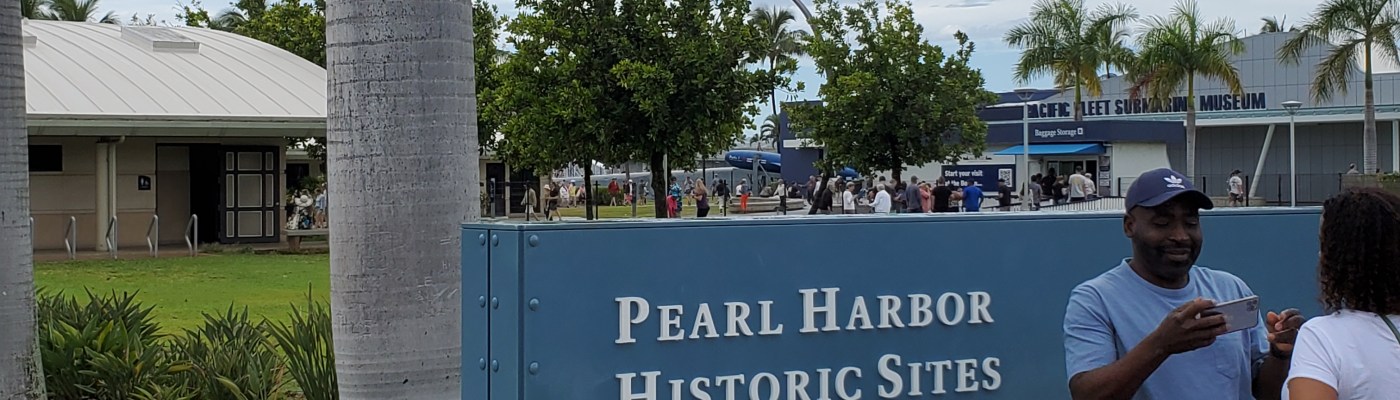
Pearl Harbor sits with quiet grace west of Honolulu on Oahu. The Hawaiians named it Wai Momi—which means pearl waters—a loving nod to the bountiful pearl oysters that used to populate the ocean bed around Ford Island in the center of the harbor. The island was an ancient Hawaiian fertility ritual site for millennia but became a sugarcane plantation after Kamehameha The Great gifted the 441-acre islet to Francisco de Paula Martin, and the land passed through several families.
In 1916, a large portion of the island was sold to the U.S. Army for a Hawaiian aviation division. It was then transferred to the U.S. Navy in 1939 after the U.S. terminated the 1911 Treaty of Commerce and Navigation with Japan for its open warfare with the Chinese Communist Party. The U.S. also restricted exporting materials the government considered valuable for war manufacturing to Japan.
Moving into Harm’s Way with the Greatest of Intentions
To extend the safety of the U.S. coastline (Hawaii became a state in 1959), the government moved the Pacific Fleet to Pearl Harbor in 1940, and Battleship Row took residence around the harbor. Submarine outfitting and maintenance were also key aspects of the Fleet’s presence in Pearl Harbor.
When the Japanese Imperial Fleet attacked Pearl Harbor on December 7, 1941, Ford Island and the surrounding U.S. Fleet in the harbor took the brunt of the bombing and torpedoes.
At 7:48 am, the sky was flooded with 353 Imperial Japanese aircraft from the Fleet’s six aircraft carriers. Of the flying onslaught, only 29 aircraft were lost. For the U.S., eight of their nine battleships were heavily damaged. Half were sunk. Other ships were damaged or sunk, and 180 U.S. aircraft were destroyed.
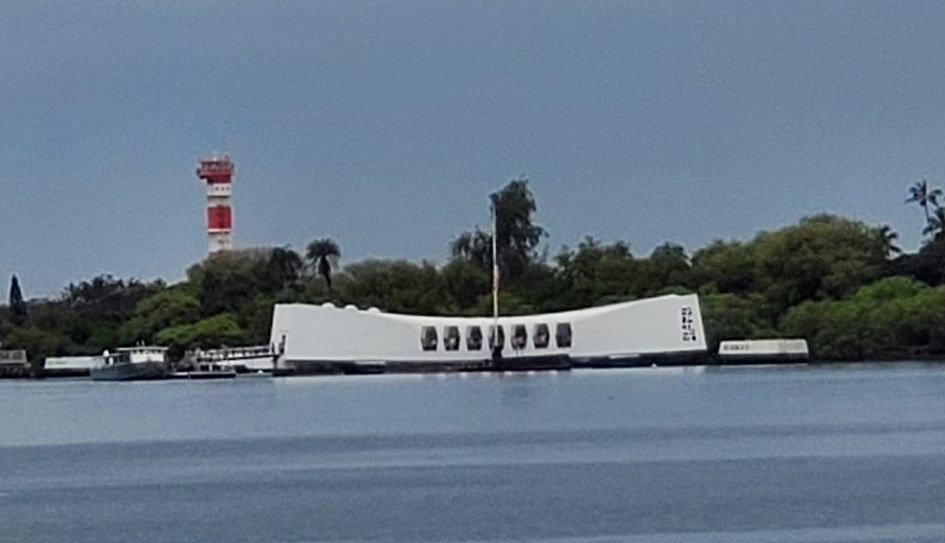
The U.S. death toll was staggering: 2,403 dead and 1,178 wounded. For days, black smoke billowed from oil and craft fires the remaining servicemen and women couldn’t extinguish. In the aftermath, all but the USS Arizona were raised from the harbor’s floor. A permanent memorial to those serving on the Arizona sits atop the sunken wreck of the ship. More on visiting the memorial is below.
I visited Pearl Harbor after it was designated a National Historic Landmark in 1964 as a curious five-year-old. My father, a lieutenant commander in the Navy, then instructed me to ask questions quietly and stop running around. He had great respect and reverence and explained that many service people had died there, and some were buried at Punchbowl, which later became the National Memorial Cemetery of the Pacific.
When my father, Commander Albert G. Moe, passed away, he lived on the Big Island of Hawaii. While he loved Punchbowl, he had also expressed interest in Arlington National Cemetery, where his father, Colonel Albert F. Moe, is interred. As a family, we chose Arlington.
Visiting Pearl Harbor
Pearl Harbor is a proud monument to military personnel and civilian citizens who gave their lives during the attack on the U.S. Fleet. It’s close to Honolulu, just a 20-minute ride from Waikiki Beach, and the only fee necessary is a $7 parking charge. Find it on Google at 1 Arizona Memorial Pl, Honolulu, HI 96818.
The grounds include several interesting museum/photo buildings (one with a film reel), memorials to each ship in the harbor on that fateful day in December and their personnel, and a theatre. You will likely experience a half-hour or longer wait for the movie, but there are snacks and souvenirs in the gift shop.
It’s easy to spend 90 minutes walking the grounds, but if you have more time, the USS Bowfin is a great tour, and it’s right there on the right side of the property. There is a fee of $21,00 and $12.99 for children 4-12 years. You save $4 if you are a local (Kama’aina rate) or military member. Budget an hour or more for the best experience.
USS Bowfin at Pearl Harbor
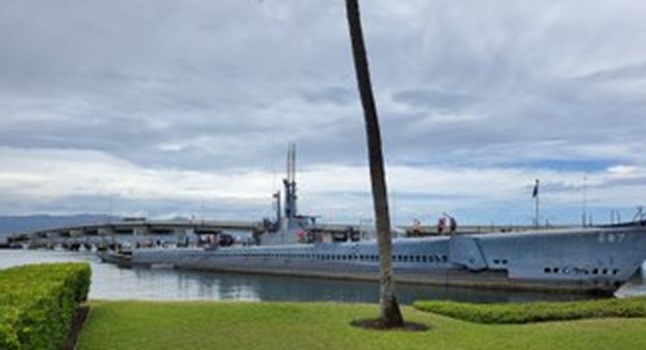
Your tour (self-guided) included the Submarine Museum and the sub itself. You can walk the deck and also go down below and see the living conditions the mariners face on the underwater vessel. There’s also an audio guide here and in the main property of Pearl Harbor.
Many visitors equate Pearl Harbor with the USS Arizona where 1,177 Sailors and Marines lost their lives, and the iconic white curved memorial. And it’s free too. But you have to take a short boat ride. The trick is that about 1,300 people visit each day, so you need reservations. For a one-dollar fee you can secure a trip at Recreation.gov. Book in advance of your trip!
If you want to add other bookings, passes are available! If you decide on the below, give yourself time to really explore each aspect.
Audio tour of the Arizona Memorial and Visitor Center up to one hour
Battleship Missouri Memorial with guided or self-guided tour up to two hours and closes at 4:00pm.
Pearl Harbor Aviation Museum up to two hours and closes at 5:00pm.
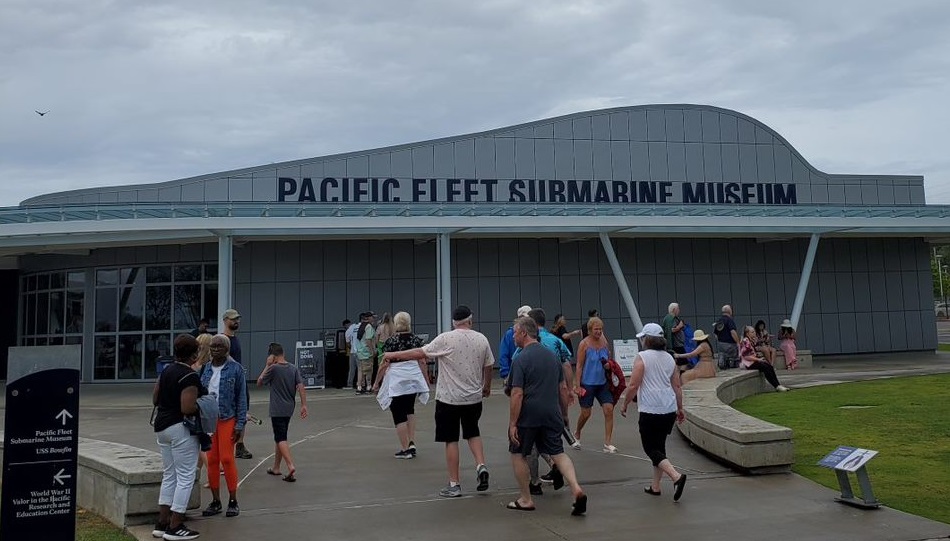
Pacific Fleet Submarine Museum up to two hours and closes at 5:00pm with last entry at 4:30pm.
Hours of Operation
The Visitor Center Audio Tour and Pearl Harbor Virtual Reality Experience 7:00am to 5:00pm
Pacific Fleet Submarine Museum 7:00am to 5:00pm (last entry 4:30pm)
Battleship Missouri Memorial 8:00am to 4:00pm
Pearl Harbor Aviation Museum 9:00am to 5:00pm
Closed on Thanksgiving Day, Christmas Day, and New Year’s Day.

