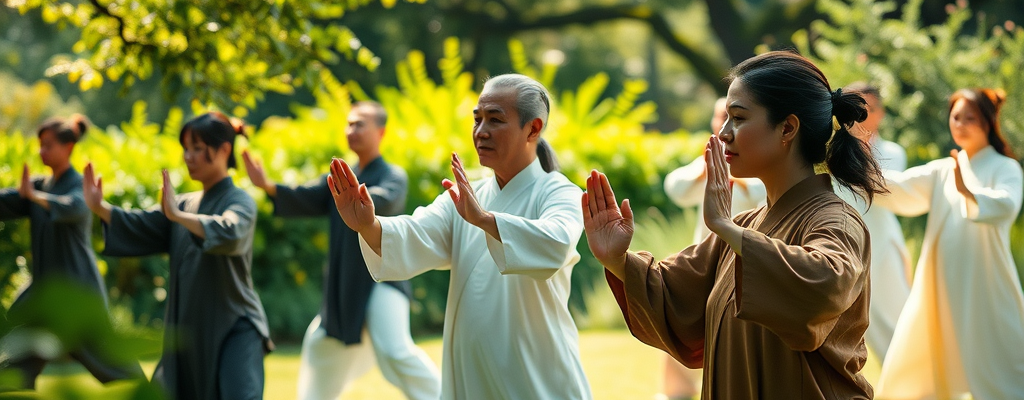
Introduction
Qigong and Tai Chi are ancient Chinese practices cultivated for thousands of years to enhance physical health, mental clarity, emotional balance, and spiritual growth. Both integrate slow, deliberate movements with mindful breathing and meditation, and they are deeply rooted in the principles of Traditional Chinese Medicine (TCM). Though they differ, Qigong and Tai Chi are closely related and share a common goal: cultivating Qi, or life energy, to promote overall well-being.
Qigong, which translates to “energy work” or “energy cultivation,” is a broad practice aimed at harnessing the flow of energy (Qi) in the body. On the other hand, Tai Chi is a martial art that incorporates similar principles of energy cultivation and movement but also emphasizes self-defense applications. While Tai Chi originates in martial arts, it has evolved into a practice known for its health benefits, focusing on balance, relaxation, and strength.
In the modern world, both Qigong and Tai Chi have gained popularity as forms of mind-body exercise, offering a range of physical, emotional, and mental benefits. These practices are accessible to people of all ages and fitness levels and are increasingly used for stress reduction, rehabilitation, and chronic disease management.
This article will explore the major components of Qigong and Tai Chi, their shared principles, differences, benefits, and their role in promoting holistic health and healing.
- The Foundations of Qigong
Qigong: Meaning and Purpose
Qigong (pronounced “chee-gong”) is an ancient system of coordinated body movement, breathing, and meditation for health, spirituality, and martial arts training. It dates back over 4,000 years and has deep roots in Chinese medicine, philosophy, and martial arts. The term “Qigong” combines two Chinese words: Qi (energy, life force, or vital energy) and Gong (cultivation or mastery), so it can be understood as the practice of cultivating energy.
The fundamental goal of Qigong is to enhance the flow of Qi through the body’s meridians or energy channels, thereby promoting physical health, mental clarity, and emotional balance. In Traditional Chinese Medicine, Qi is the fundamental force that animates all living beings. When Qi flows smoothly and is abundant, a person experiences health and vitality; when Qi is stagnant or deficient, illness and imbalance can arise.
Components of Qigong
Qigong is typically broken down into three main components:
- Body Posture and Movement: Practitioners use a variety of postures, both moving and stationary, that are designed to stimulate and guide the flow of energy. These movements are often slow, gentle, and deliberate, allowing for focused awareness and deep relaxation.
- Breathing Techniques: Proper breathing is central to Qigong, and different styles emphasize various breathing patterns to stimulate and regulate the flow of Qi. This may include abdominal breathing, breathing through the nose, or coordinating the breath with specific movements.
- Mental Focus and Meditation: A calm, focused mind is crucial in Qigong. Meditation is often incorporated to bring awareness to the breath, movements, and internal energy, cultivating mindfulness and tranquility.
Types of Qigong
Qigong has several styles and schools, each with its unique emphasis and purpose. Some of the major types include:
- Medical Qigong: Focused on healing and disease prevention, this Qigong is commonly used with Traditional Chinese Medicine to treat various health conditions.
- Spiritual Qigong: This form focuses on cultivating inner peace, spiritual growth, and enlightenment. It often involves deep meditation and breathing techniques.
- Martial Qigong: Martial Qigong is used by martial artists to build physical strength, endurance, and resilience. It focuses on the cultivation of internal energy for fighting and defense.
- Health and Wellness Qigong: Practiced by millions worldwide, this form aims to maintain health, reduce stress, and improve quality of life through gentle movements and breath regulation.
- The Foundations of Tai Chi
Tai Chi: Meaning and Origins
Tai Chi (also known as Taiji) is a traditional Chinese martial art that evolved into a mind-body exercise. Tai Chi translates to “Supreme Ultimate,” a reference to the philosophical concept of the balance between Yin and Yang, the complementary forces in nature. Tai Chi’s roots can be traced back to the 12th century, and it combines aspects of martial arts with energy cultivation and meditation.
Tai Chi is characterized by its slow, flowing movements, which are performed in a continuous sequence. Practitioners move from one posture to the next in a smooth, graceful manner, coordinating their movements with deep, relaxed breathing. While Tai Chi can be practiced as a martial art for self-defense, most people today practice it for its health benefits, such as improving balance, reducing stress, and enhancing overall well-being.
Components of Tai Chi
Like Qigong, Tai Chi integrates physical movement, breath control, and mental focus. The critical components of Tai Chi include:
- Movement and Posture: Tai Chi involves a series of slow, deliberate movements executed precisely and controlled. These movements are designed to flow seamlessly from one to another, creating a continuous, circular motion. The postures often mimic nature, with names like “Grasp the Sparrow’s Tail” or “Parting the Wild Horse’s Mane.”
- Breathing: Tai Chi emphasizes deep, diaphragmatic breathing, often coordinated with movement. Proper breathing helps to calm the mind, regulate energy, and enhance relaxation.
- Mental Focus and Meditation: An essential aspect of Tai Chi is cultivating focused awareness. By concentrating on the flow of movements and the rhythm of the breath, practitioners achieve a meditative state that promotes relaxation and mental clarity.
Styles of Tai Chi
There are several styles of Tai Chi, each with its emphasis and characteristics. The most popular styles include:
- Yang Style: The most widely practiced form of Tai Chi, known for its large, sweeping movements and relatively slow pace.
- Chen Style: The original form of Tai Chi includes faster, more explosive movements as well as jumps and punches. It is often practiced by those with a more profound interest in the martial arts aspect of Tai Chi.
- Wu Style: A more compact style characterized by smaller, more subtle movements. Older adults or those looking for a more gentle form of Tai Chi often practice Wu Style.
- Sun Style: A relatively modern form of Tai Chi that incorporates elements of other martial arts, including Xing Yi and Bagua. It is known for its upright stance and agile movements.
- The Similarities Between Qigong and Tai Chi
Qigong and Tai Chi share common principles and goals, so they are often practiced together. Some of the critical similarities include:
- Cultivation of Qi: Both practices focus on regulating and enhancing the flow of Qi within the body, promoting health and vitality.
- Mind-Body Connection: Qigong and Tai Chi emphasize integrating physical movement, breath, and mental focus. This mind-body connection is essential for achieving the full benefits of each practice.
- Slow, Deliberate Movements: Both practices involve slow, controlled movements designed to cultivate awareness and improve balance, flexibility, and coordination.
- Relaxation and Stress Reduction: One of the main benefits of both Qigong and Tai Chi is their ability to reduce stress and promote relaxation. By calming the mind and releasing tension from the body, these practices help to lower stress levels and improve mental clarity.
- Holistic Health Benefits: Both practices have a wide range of benefits, from improving cardiovascular health and immune function to reducing anxiety and improving sleep.
- Differences Between Qigong and Tai Chi
While Qigong and Tai Chi share many similarities, they also have distinct differences, particularly in their goals and applications.
- Focus: Qigong primarily focuses on cultivating internal energy (Qi) and can be used for various purposes, including healing, spiritual growth, and martial arts training. Tai Chi, on the other hand, is a martial art that emphasizes self-defense and energy cultivation.
- Structure: Qigong exercises are generally more flexible and can be practiced in different postures, including standing, sitting, and lying down. Tai Chi follows a more structured sequence of movements, with each style having specific forms and postures.
- Complexity: Tai Chi is often more complex than Qigong due to its martial arts background and precise, flowing sequences. Qigong can be easier to learn, especially for beginners, as it typically involves more superficial, repetitive movements.
- Martial Applications: While Qigong is mainly a health and wellness practice, Tai Chi has its origins in martial arts and can be used for self-defense. Its specific movements are designed to neutralize an opponent’s force.
- Health Benefits of Qigong and Tai Chi
The health benefits of Qigong and Tai Chi are well-documented, and both practices are increasingly being integrated into modern healthcare to prevent and manage chronic diseases. Some of the most significant benefits include:
- Improved Balance and Flexibility: Qigong and Tai Chi improve balance, coordination, and flexibility, which can help reduce the risk of falls, especially in older adults.
- Stress Reduction: Both practices’ meditative and calming nature helps lower cortisol levels, reduce stress, and improve mental clarity.
- Cardiovascular Health: Studies have shown that practicing Qigong and Tai Chi can lower blood pressure, improve circulation, and enhance heart health.
- Improved Mental Health: Both practices have been shown to reduce anxiety, depression, and symptoms of post-traumatic stress disorder (PTSD). Combining movement, meditation, and breathing promotes calm and emotional stability.
- Chronic Pain Management: Tai Chi and Qigong effectively reduce chronic pain, including arthritis, fibromyalgia, and lower back pain.
- Enhanced Immune Function: Regular Qigong and Tai Chi practice can improve immune function, helping the body resist illness better and recover quickly from disease.
- Qigong and Tai Chi in Modern Healthcare
As more research supports the effectiveness of Qigong and Tai Chi, these practices are increasingly being incorporated into Western medicine as complementary therapies. They are used in rehabilitation settings, mental health treatment programs, and wellness initiatives for chronic disease management. Hospitals, clinics, and rehabilitation centers around the world now offer Tai Chi and Qigong classes to help patients with conditions like heart disease, diabetes, cancer, and mental health disorders.
Conclusion
Qigong and Tai Chi are powerful mind-body practices that offer a range of physical, emotional, and spiritual benefits. Whether practiced for healing, martial arts training, or overall well-being, these ancient practices are deeply rooted in energy cultivation and balance principles. With their focus on slow, mindful movement and breathing, Qigong and Tai Chi provide an accessible and effective way to enhance health and achieve harmony in today’s fast-paced world.
 Natural Health and Holistic Care
[…] modalities to restore balance and harmony within the body. These methods aim to regulate the flow of Qi, balance Yin and Yang, and harmonize the Five […]
LikeLike
[…] Tai Chi and Qigong: These mind-body practices combine movement, meditation, and breathing exercises to enhance physical and mental well-being. […]
LikeLike
[…] Yoga and Tai Chi: Practices that combine physical postures, breathing exercises, and meditation. […]
LikeLike